SELINA’s 8th Workshop in Riga advances knowledge exchange and the practical application of project results
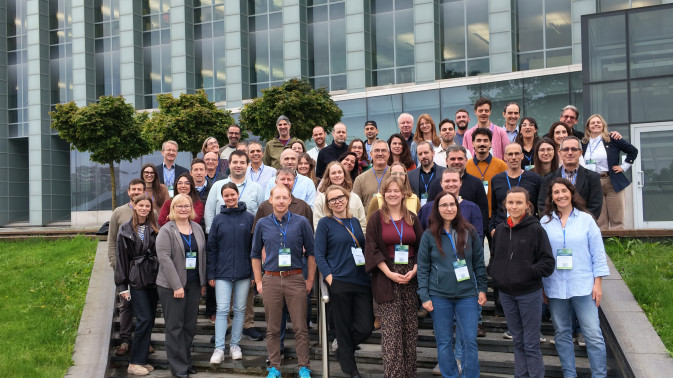
Between 28 September and 1 October 2026, the SELINA partners gathered in Riga, Latvia, for the project’s 8th Workshop, organised by Latvian partners Ministry of Smart Administration and Regional Development (MoSARD) and Baltic Environmental Forum (BEF). Hosted at the Riga National Library, the four-day event brought together around 50 participants in person, with a further 10 joining online, for discussions on the project’s latest results, the Demonstration Projects and the practical application of SELINA’s outputs.
The workshop provided an important opportunity for partners to take stock of the progress achieved so far and to discuss the next steps for the remaining project outputs. With SELINA moving towards the final stages of its work, discussions focused increasingly on how the knowledge, tools and guidance developed throughout the project can be brought together and made useful for decision-makers and stakeholders working with natural capital, biodiversity and ecosystem services.
A particular focus of the workshop was placed on the SELINA Demonstration Projects, which provide practical examples of how ecosystem service and natural capital knowledge can support evidence-based decision-making in different contexts across Europe. Partners shared experiences and results from the Demonstration Projects, reflecting on the approaches applied, the lessons learned and the ways in which these experiences can contribute to the project’s wider objectives. The discussions also highlighted opportunities to strengthen the links between the practical experiences gathered through the Demonstration Projects and the guidance being developed within SELINA.
Another important topic was the Compendium of Guidance, with partners discussing its development and the role it will play in bringing together the knowledge and practical recommendations generated throughout the project. The workshop provided an opportunity to review progress, exchange feedback and identify new pathways for completing and strengthening the project’s remaining outputs. Through these discussions, partners worked towards ensuring that SELINA’s results are not only scientifically robust, but also accessible and relevant to the different audiences that can use them in practice.
The workshop programme also included opportunities to explore the Latvian context and learn from local environmental challenges and approaches. During a field visit, participants travelled to the Vidzeme coast along the Gulf of Riga and the Baltic Sea, gaining first-hand insight into the region’s landscapes and ecosystems. The visit complemented the workshop discussions by connecting the project’s work on ecosystem services and natural capital with real-world examples of environmental management and the interactions between ecosystems, communities and human activities.
Throughout the four days, the workshop combined presentations, discussions, knowledge exchange and practical examples, allowing partners to reflect on the progress made while identifying priorities for the remainder of the project. The meeting also strengthened collaboration across the consortium and provided space to discuss how the different strands of SELINA’s work can be brought together into coherent and useful outputs.
The 8th SELINA Workshop in Riga marked another important milestone in the project, bringing partners together to consolidate results, share experiences and establish new pathways for the remaining work. As SELINA continues towards its final stages, the collaboration and knowledge developed across the consortium will support the completion and uptake of the project’s outputs, contributing to more evidence-based and sustainable decisions about natural capital and ecosystem services. The next and final project meeting will take place in April 2027 in Brussels, Belgium, bringing the SELINA partners together once more to reflect on the project’s achievements and discuss its lasting impact.