A digital transformation for nature-positive urban planning: Insights from SELINA’s Grønlikaia Demonstration Project
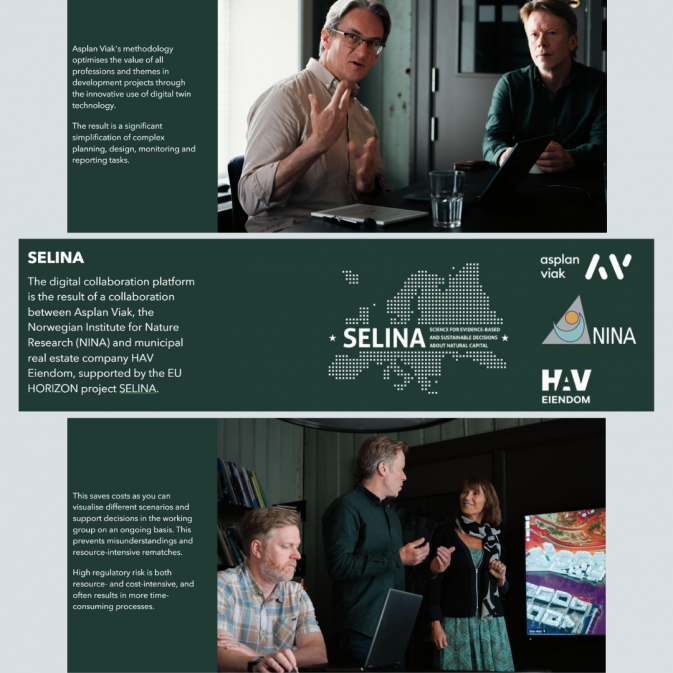
The Grønlikaia development in central Oslo has become a showcase for how digital innovation, ecological knowledge and collaborative planning can come together to support nature-positive urban transformation. Through a partnership between Asplan Viak, the Norwegian Institute for Nature Research (NINA) and the municipal real estate company Hav Eiendom, and supported by the SELINA project, a pioneering digital platform has been created that is reshaping the way authorities, planners and developers integrate nature and climate considerations into complex urban projects.
Grønlikaia, once a closed harbour area dominated by hard quaysides, containers and port infrastructure, is now set to become the final piece of Oslo’s evolving fjord district. The area will be transformed into a vibrant neighbourhood of homes, offices, public spaces and a new harbour promenade. As the urban zoning process progressed, the SELINA Demonstration Project ran in parallel, allowing the partners to test, refine and validate a new model for digital interaction in planning.
The result is a sophisticated web-based platform built around a three-dimensional digital twin that integrates all relevant environmental, ecological, regulatory and design information into one shared system. By centralising all data and results, the platform supports more efficient regulatory oversight. In the future, municipal authorities can access the full evidence base behind planning proposals and use the detailed results of natural capital assessments and blue-green factor calculations to inform wider urban ecosystem accounts at a higher resolution than was previously possible.
The Grønlikaia platform is already influencing the development of a new district at Filipstad in Oslo, signalling a broader transformation in how urban areas can be designed with ecological integrity at their core.
Within SELINA, the Grønlikaia project stands as a leading example of how digital tools can operationalise ecosystem services and natural capital assessments in real planning contexts. It shows how nature-based solutions, ecological indicators and environmental regulations can be embedded into everyday decision-making through accessible, transparent and data-rich tools. As urban areas across Europe face the dual challenges of development pressure and nature loss, the lessons from Grønlikaia provide a compelling model for integrating digital innovation with ecological responsibility.